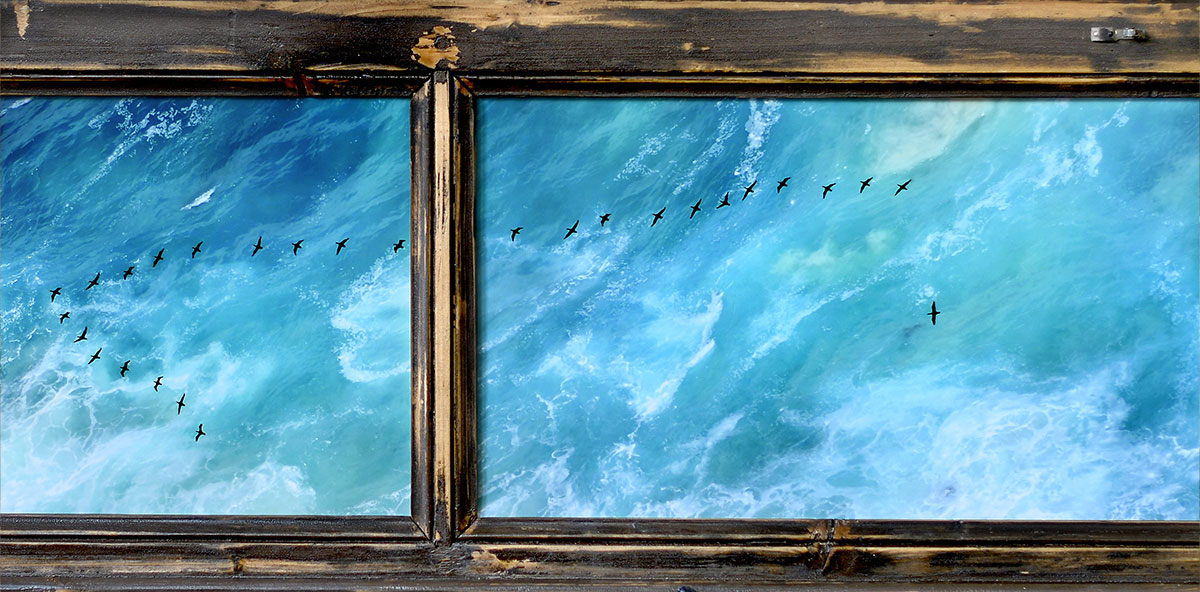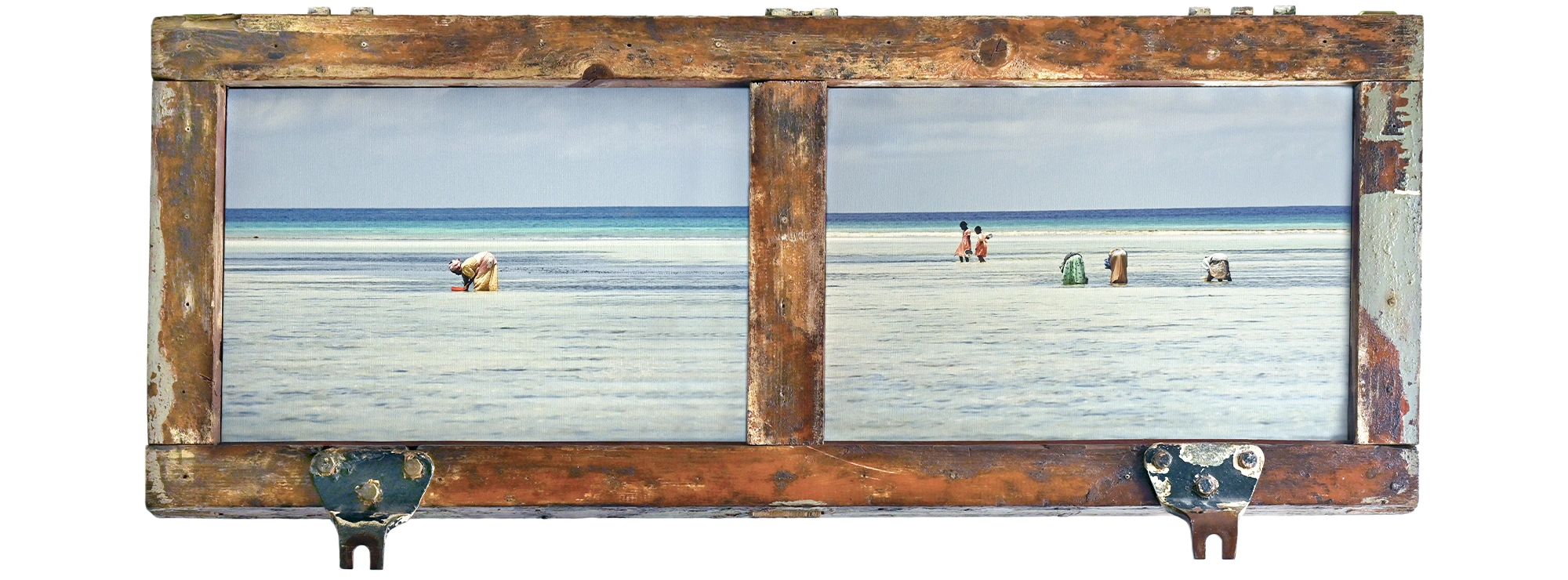
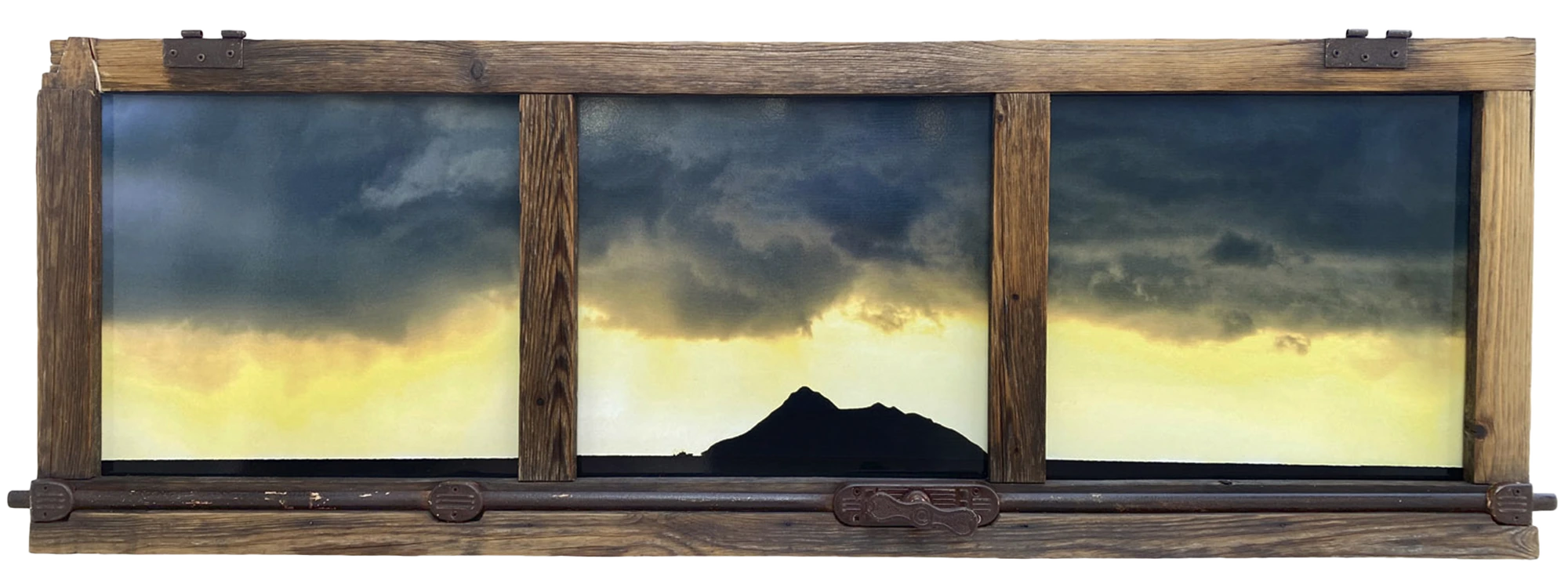
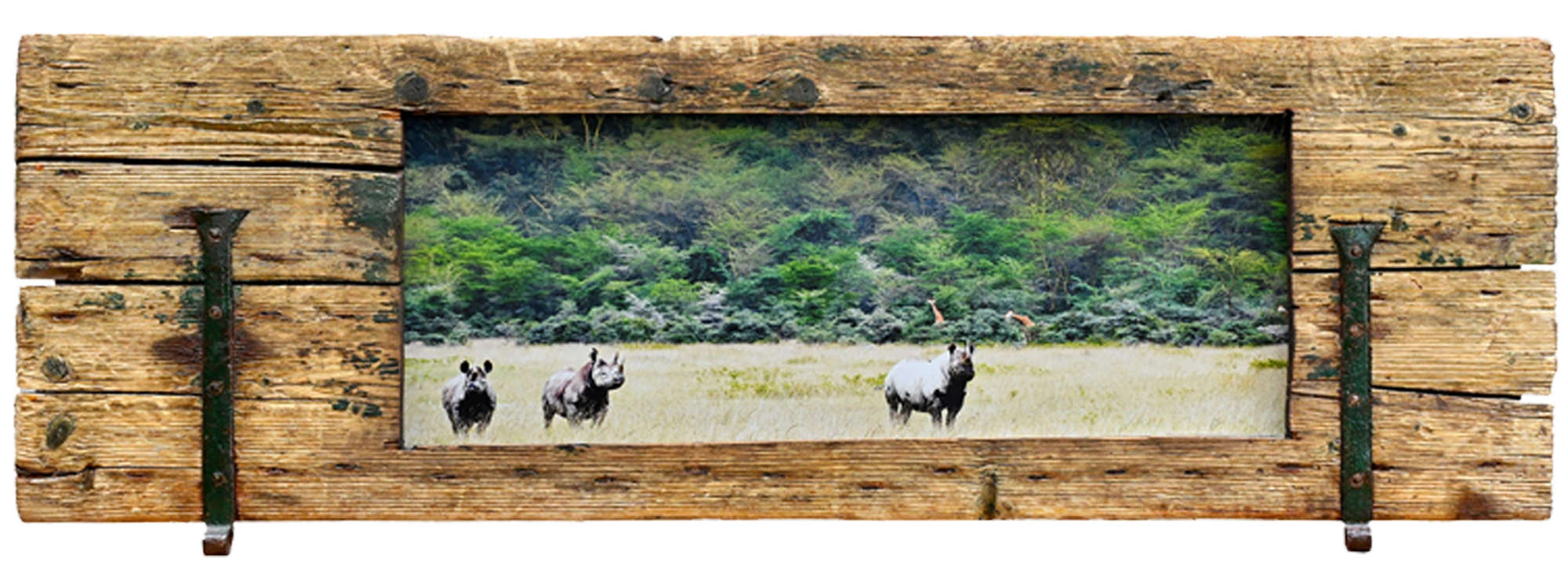
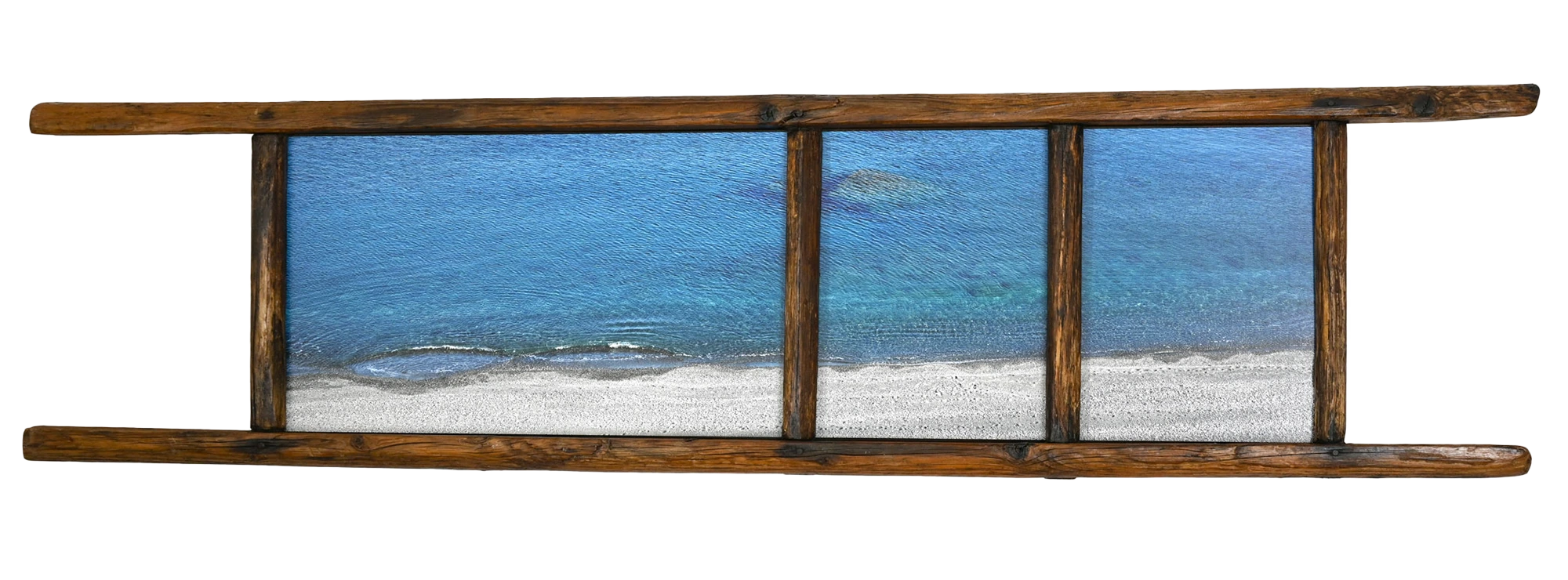
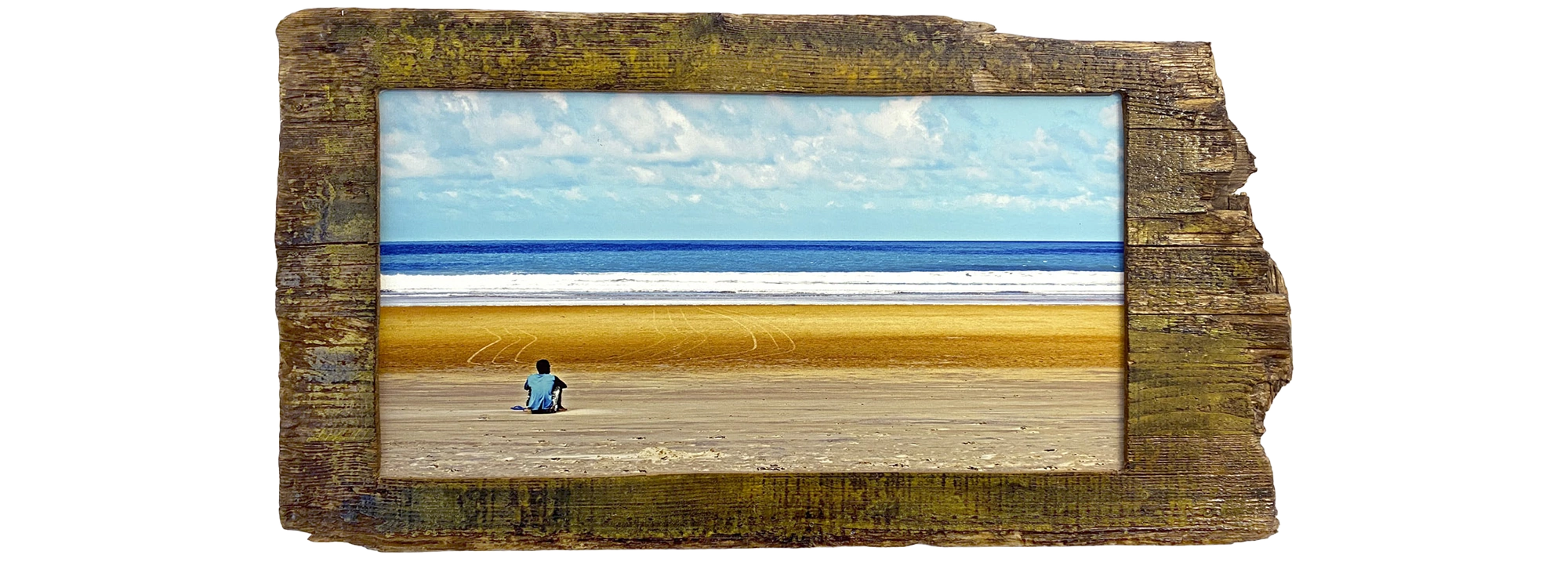
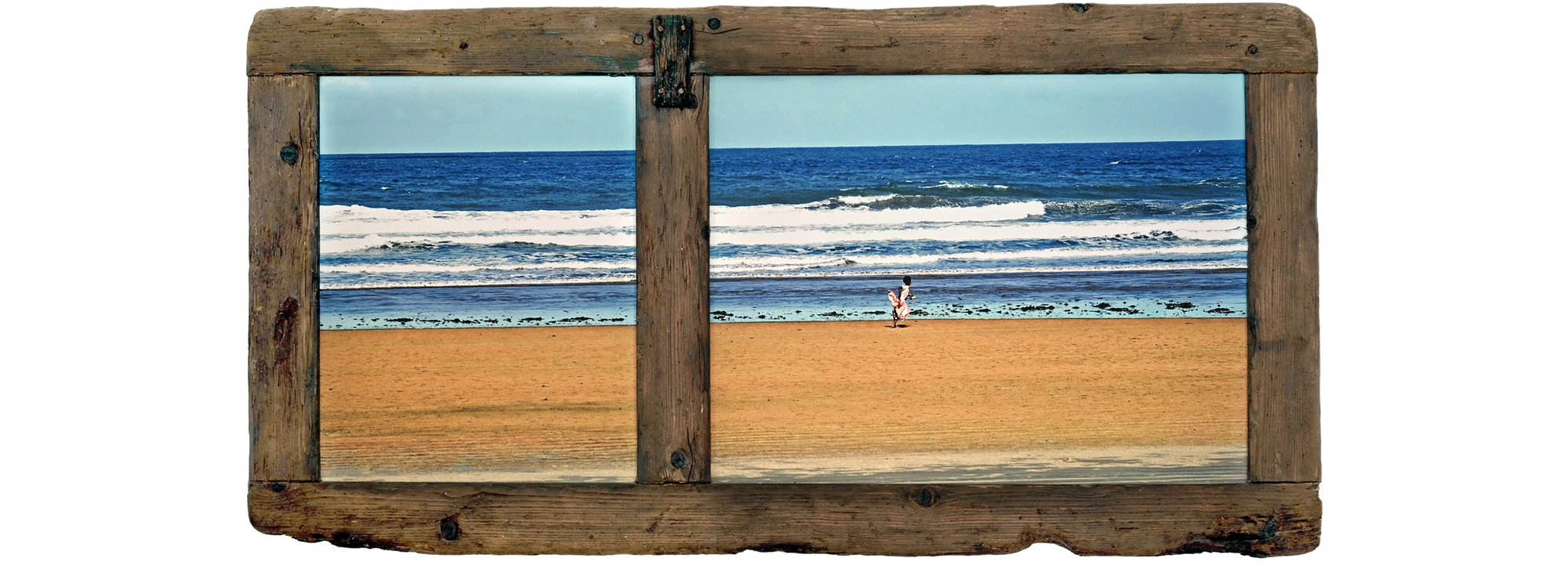
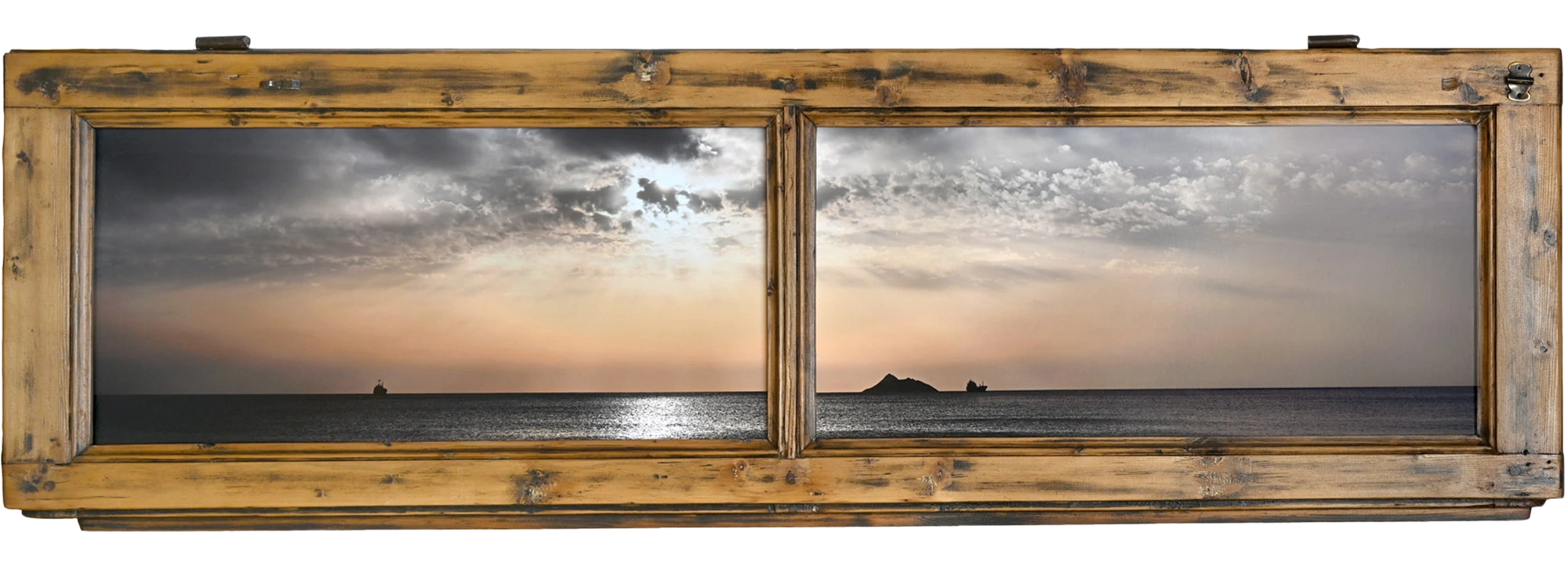
Esocalie are the artworks by Enrico De Santis, which combine photography and the recycling of old doors, windows, wooden stairs, or other structures reclaimed and restored by the artist. These are not simple frames but, like photographs, they constitute an integral part of the works themselves.
“Esocalia” or “Exokalya” is a term coined by the artist himself, combining the Greek prefix “éxō” (ἔξω) that means “outside” with the Greek adjective “kalòs” (καλός) that means “beautiful.” It indicates the artistic approach of bringing out Beauty and bringing it within us. At the same time, “Esocalia” refers to both the outermost part (éxō) of the work and the beauty (kalòs) within it.
“Many Esocalie don’t seem to have that direct relationship
with reality that is typical of photography.
They seem like totally artificial images, but in reality they are photographs.”
The “Esocalie” images are fine art prints on premium papers (cotton, baryta) or high-quality canvas. They represent visions that transcend the reality from which they originate. These images have a metaphysical atmosphere that exalts Beauty as a profound concept to be both sought and protected.
The photographs are selected and produced to create a unique, inseparable work, seamlessly integrated with the restored elements. The “Esocalie” are characterized by this union between wood and images, which sustain each other in perfect balance, creating a unique and unrepeatable fusion. An artistic symbiosis between fine photography and material, as if they have always shared a common origin and an impossible, distinct destiny.
“The Esocalie are unique works
that tear down walls and let Beauty in.”
The doors and windows do not surround the work, but are an integral part of it while essentially maintaining their original nature. They remain physical doors and windows, but the artist changes their intended use, enhancing their symbolic function as connecting elements between different places, environments, and dimensions.
Thanks to these pieces of wood, each with its own history and its own restoration/reclaim process, the “Esocalie” transcend the reproducibility typical of photography, becoming materially unrepeatable by their very nature, as well as formally unique and authentic through a sophisticated certification system.
“Beauty opens the windows
that fear wants to close.”
Looking at Enrico De Santis’s creations is like crossing a threshold. There are no boundaries, only connections: between past and present, between nature and artifice, between denunciation and poetry. Because social and environmental denunciation is a note that resonates loud and clear.
They are “windows open to the world, forcing us to see what we often pretend not to notice: the urgency of preserving nature, social inequality, the wounds that humanity inflicts on the planet. Thus, works like “Ipostasi” cry out against pollution, while “Nexus” narrates, without words, the unbearable imbalance between richer or poorer.
The strength lies not only in the message, but in the subtle dialogue between material and image, in the way the roughness of worn wood marries the delicacy of a snapshot, in the connection between what was and what is. Unique and authentic works carved from the material, a story that tells a fragment of emotion.
Enrico De Santis, whose lifelong reportages have chronicled the heroes who challenge the mafia, the ecological wounds of our time, and the faces and stories of those fighting for a better future, has found his most intimate and powerful synthesis in these works.
It is his declaration of love for a planet that needs to be seen, understood, and respected.
Today, the “Esocalie” travels to prestigious exhibitions and private collections, from the Genoa Biennale to the Milan Triennale, captivating eyes and hearts across Europe. But their secret remains simple and profound: they are always open doors that nourish the soul. And perhaps, in a world that builds walls and borders, this is the most revolutionary art there is.
By Enrico Pentonieri
Editor of Senzalinea.it